


At a glance
- Most finance companies manage SAMA requirements reactively. The cost shows up in repeated findings, slow product launches and pressure on management time.
- Readiness moves through four stages of maturity, from reactive to strategic. The goal is to embed requirements into how the company runs.
- Boards can start with three moves: diagnose across six capabilities, prioritise by exposure, and turn regulatory change into a routine.
Saudi Arabia's finance companies are entering a new phase. Consumer, SME, real estate and digital lenders are expanding their products and channels, while the Saudi Central Bank (SAMA) continues to strengthen its framework for governance, compliance, internal audit, consumer protection, financial crime and cyber security.
In this environment, the question for boards is no longer whether the company complies. It is whether compliance is built into the way the company works, or assembled each time a review approaches.
Where most companies are today
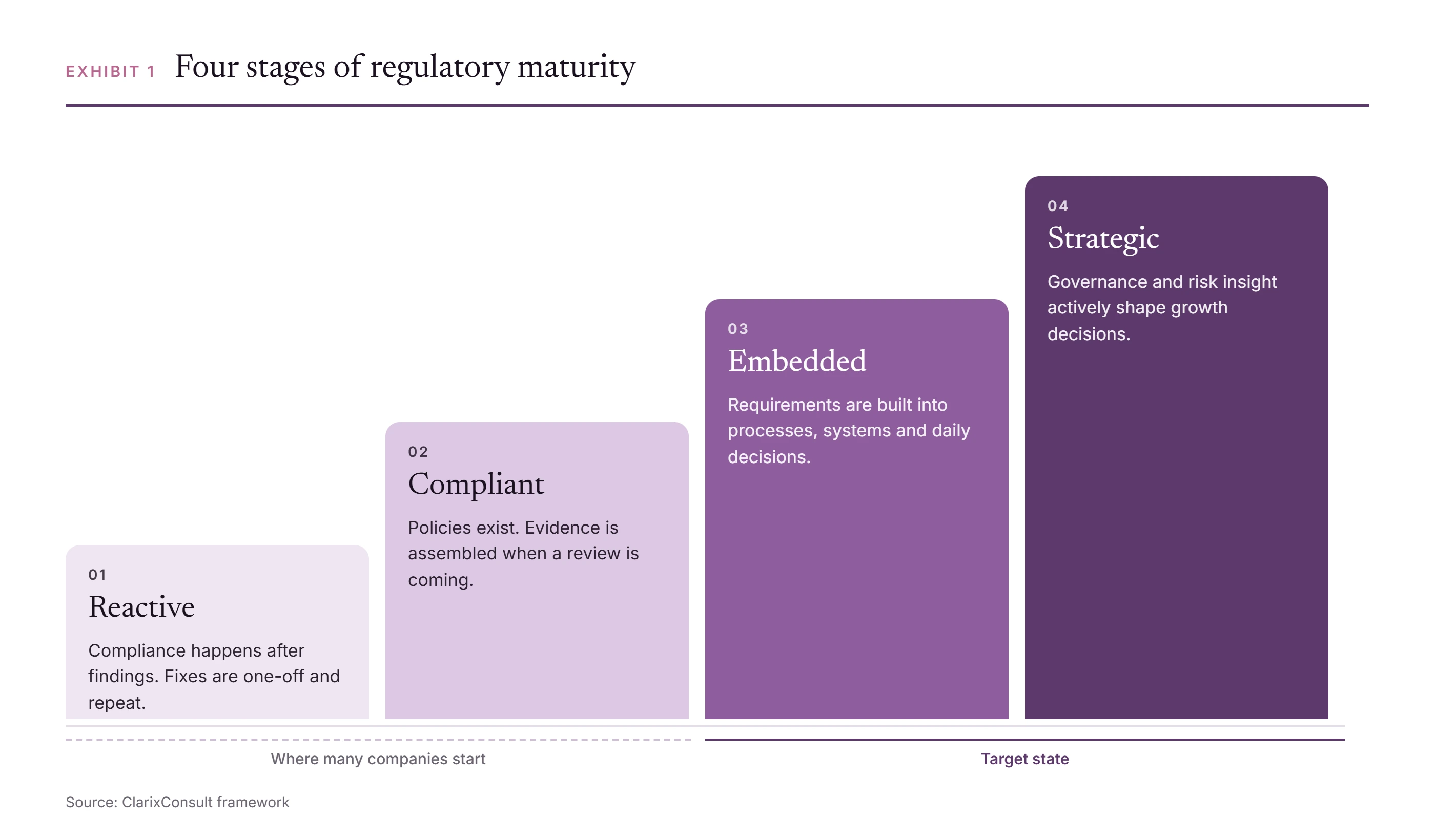
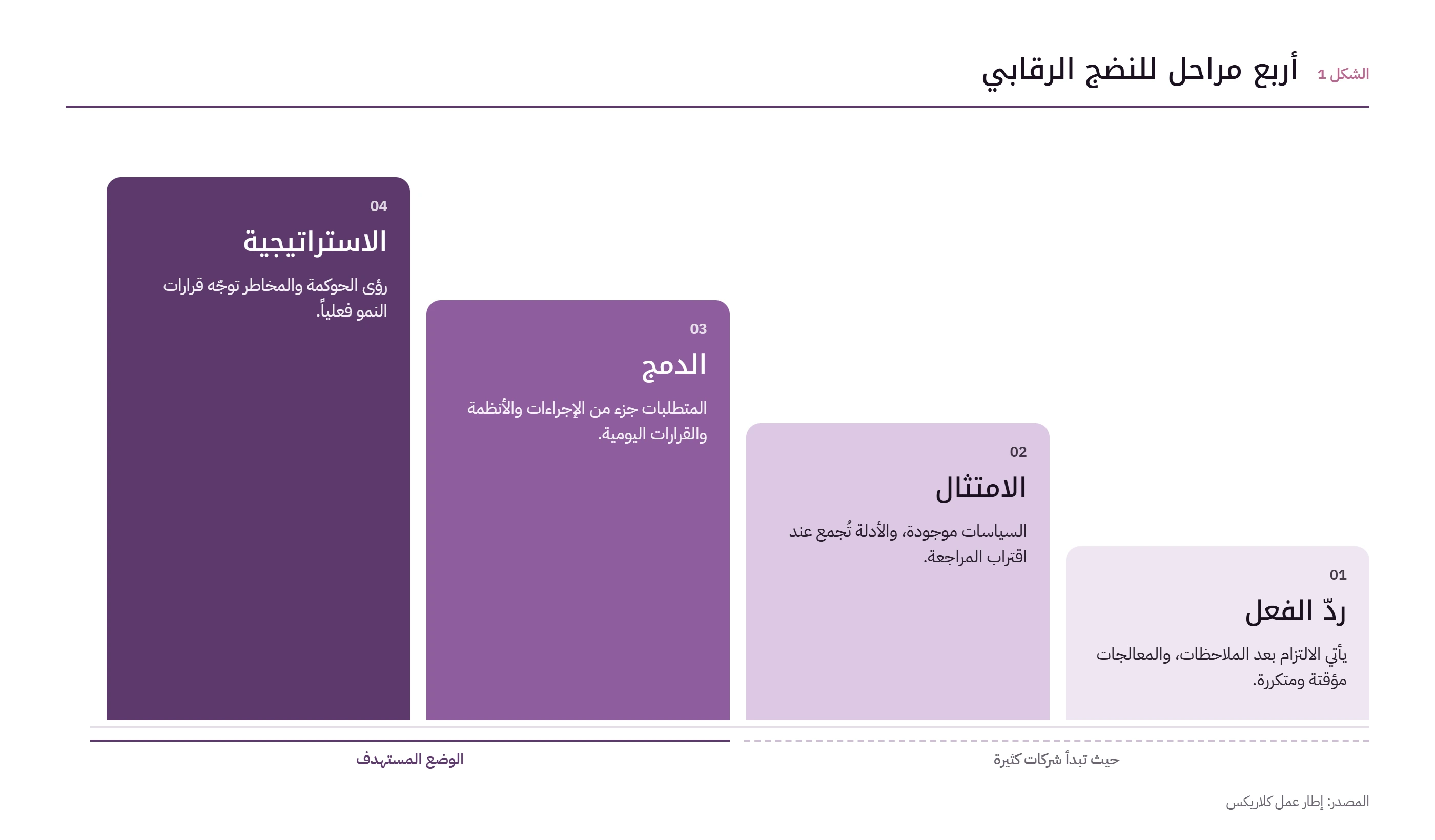
We see finance companies move through four stages of regulatory maturity (Exhibit 1). Many start at the reactive or compliant stage, where policies exist but evidence is assembled under pressure. The real gains come from reaching the embedded stage, where requirements are part of processes, systems and decisions, and the strategic stage, where governance and risk insight inform growth.
Know where you stand
Not every company needs the same response. The right priority depends on two dimensions: how much regulatory exposure the business carries, driven by its products, customer base and channels, and how mature its controls are (Exhibit 2).
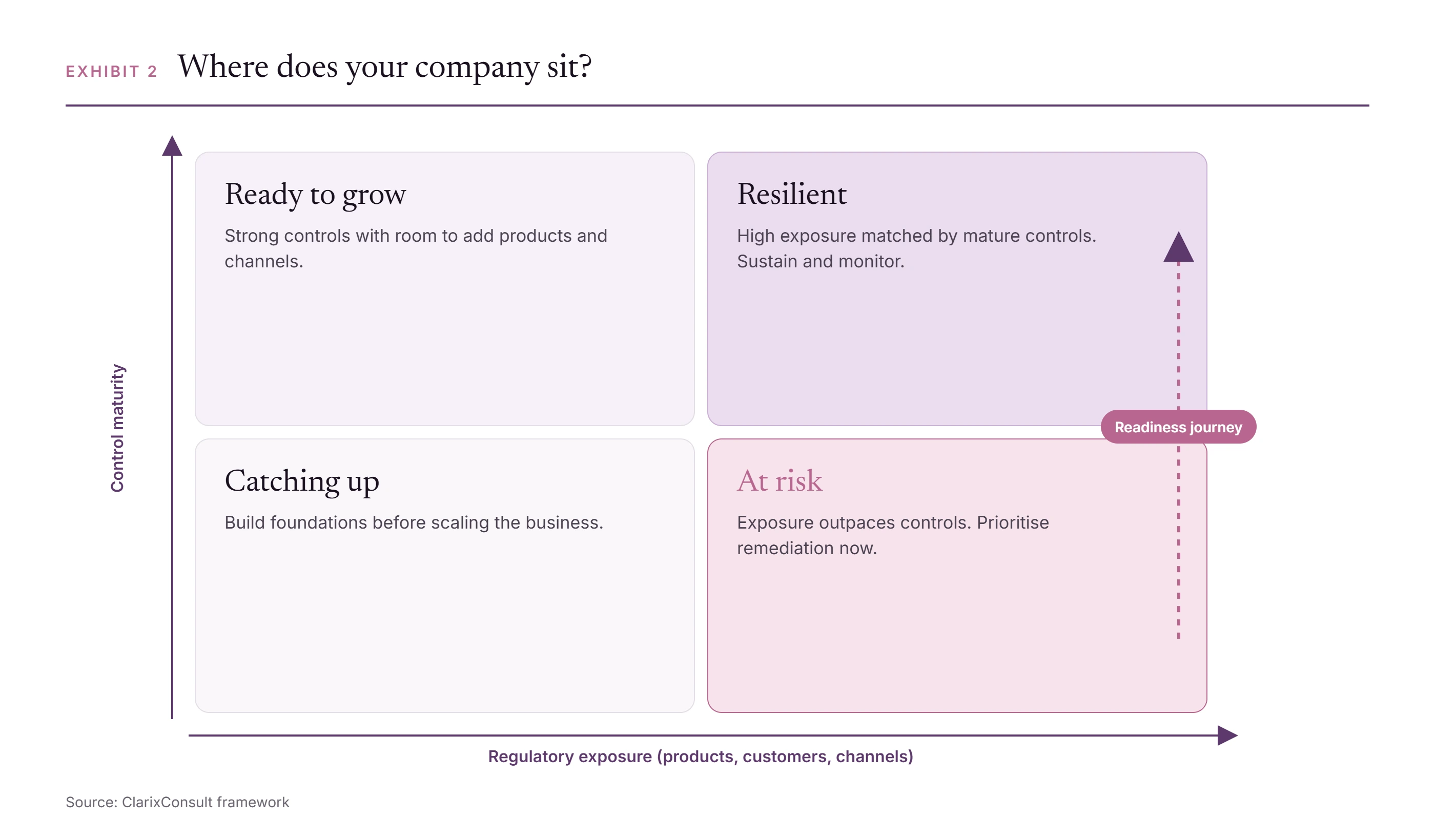
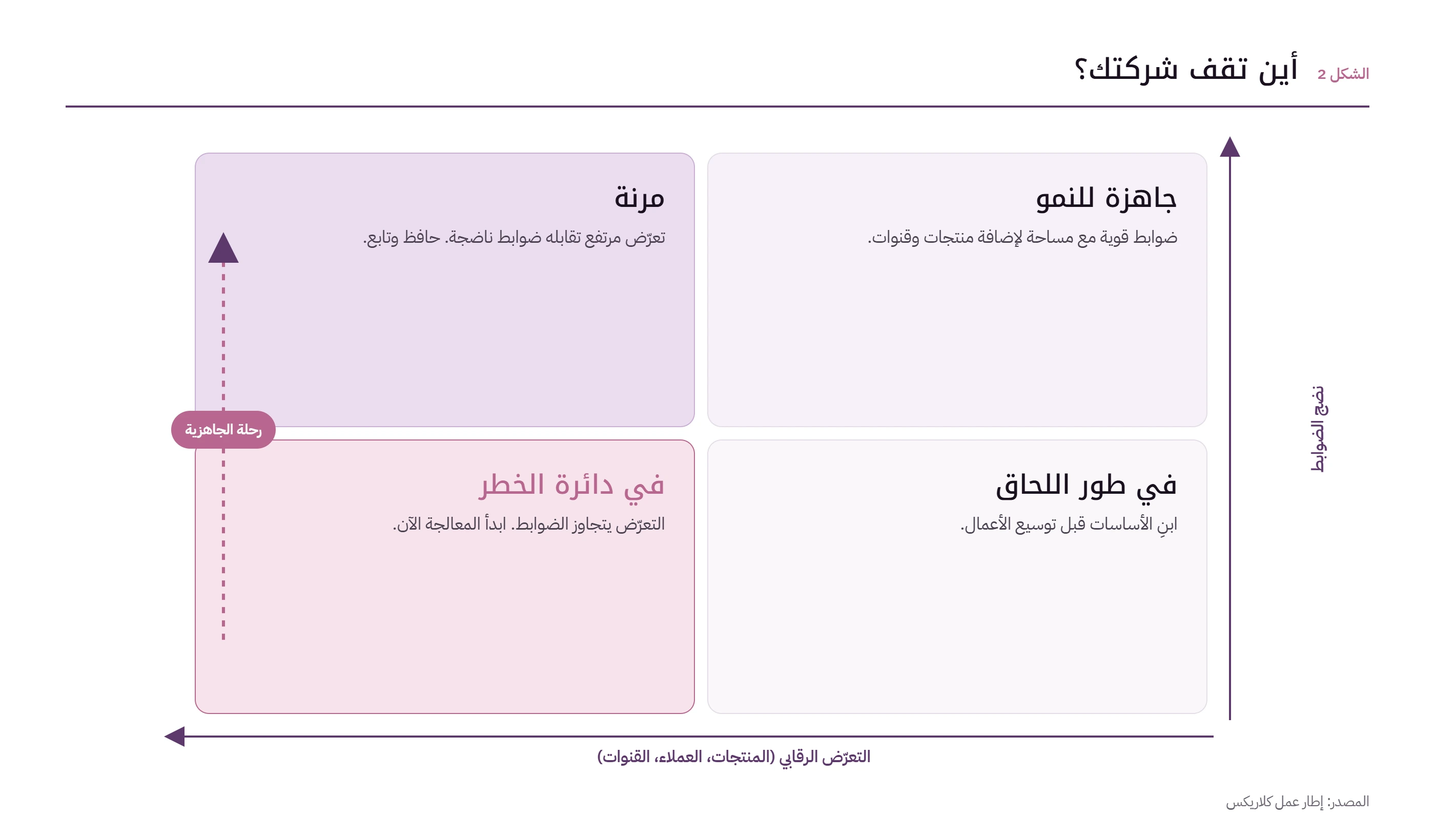
Companies in the at risk quadrant, where exposure has outpaced controls, need focused remediation before adding new products or channels. Companies that are catching up should build foundations now, while the business is still simple enough to change.
Six capabilities that define readiness
A readiness diagnostic assesses each capability against the four stages of maturity, and sets a realistic target for each one (Exhibit 3).
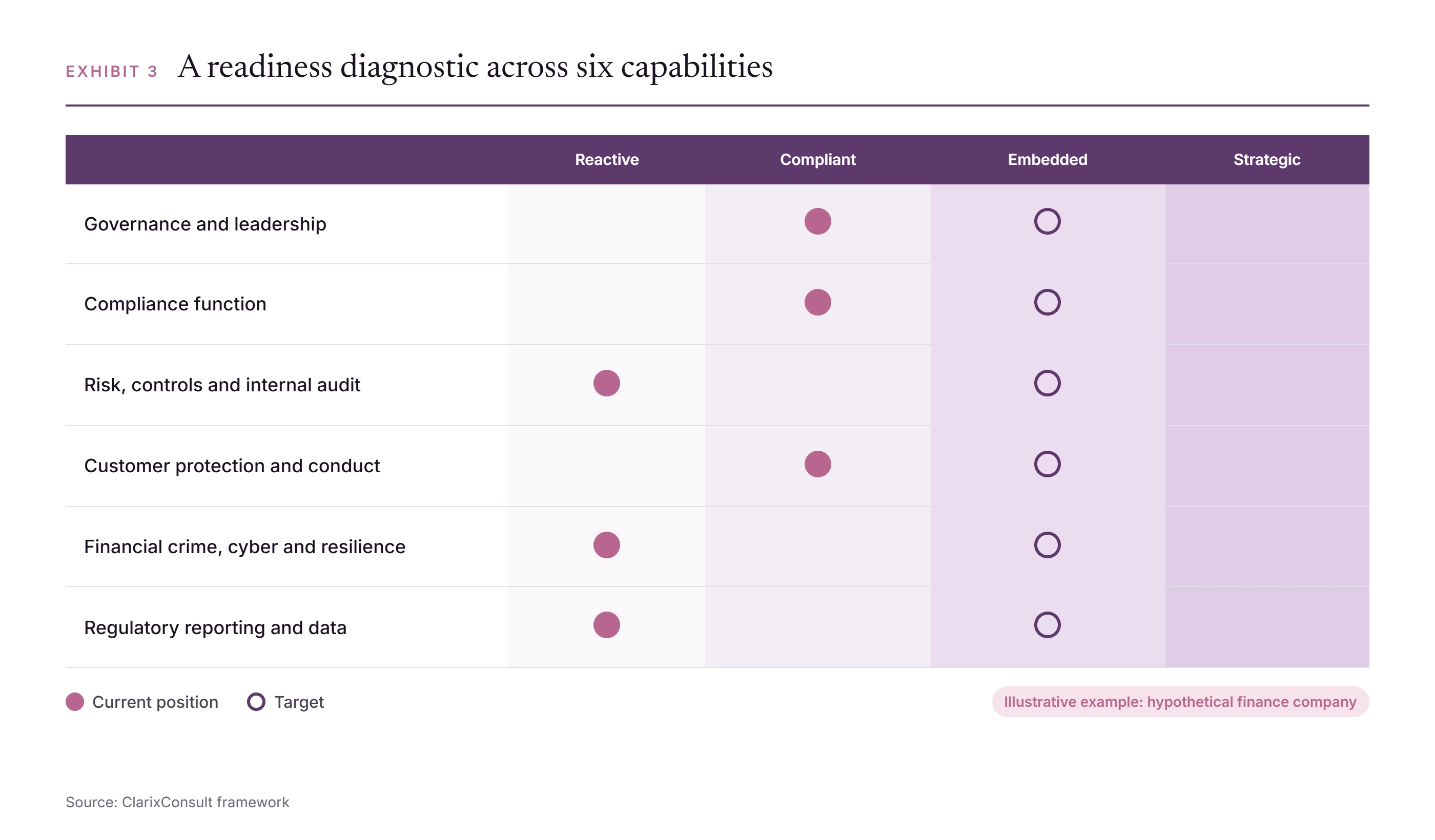
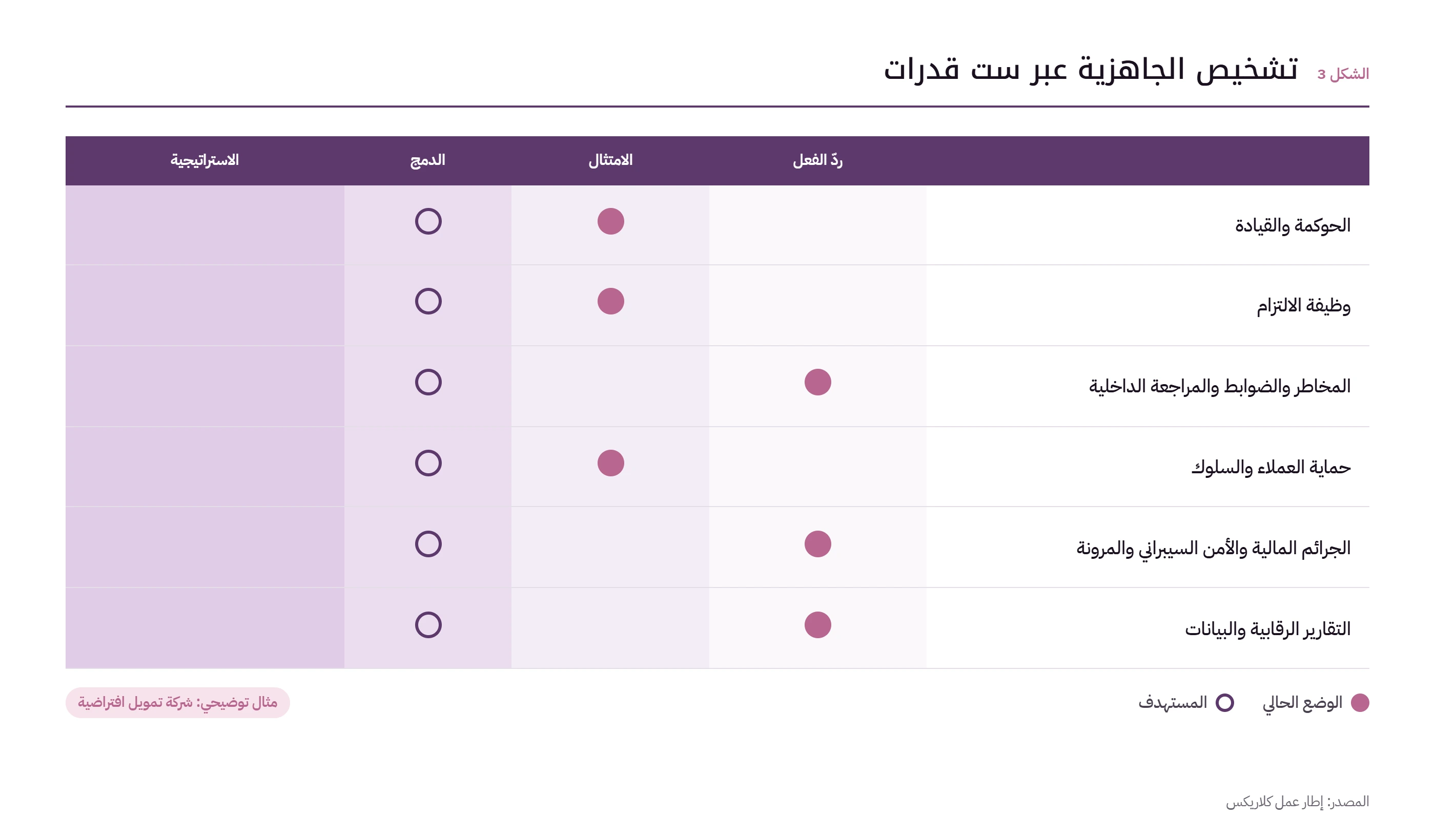
- Governance and leadership. SAMA's governance requirements for finance companies cover the board, its committees, senior management and appointments to senior positions.
- Compliance function. SAMA's compliance principles call for an independent function with a clear mandate and a risk-based plan.
- Risk, controls and internal audit. Risks are owned, controls are tested, and internal audit reports independently, guided by SAMA's internal audit principles.
- Customer protection and conduct. Fair treatment, disclosure, responsible lending and complaint handling, in line with SAMA's consumer protection principles for finance companies.
- Financial crime, cyber and resilience. Anti-money laundering controls, the SAMA Cyber Security Framework and tested business continuity plans.
- Regulatory reporting and data. Accurate, timely reports that reconcile with the company's own data.
Make regulatory change a routine
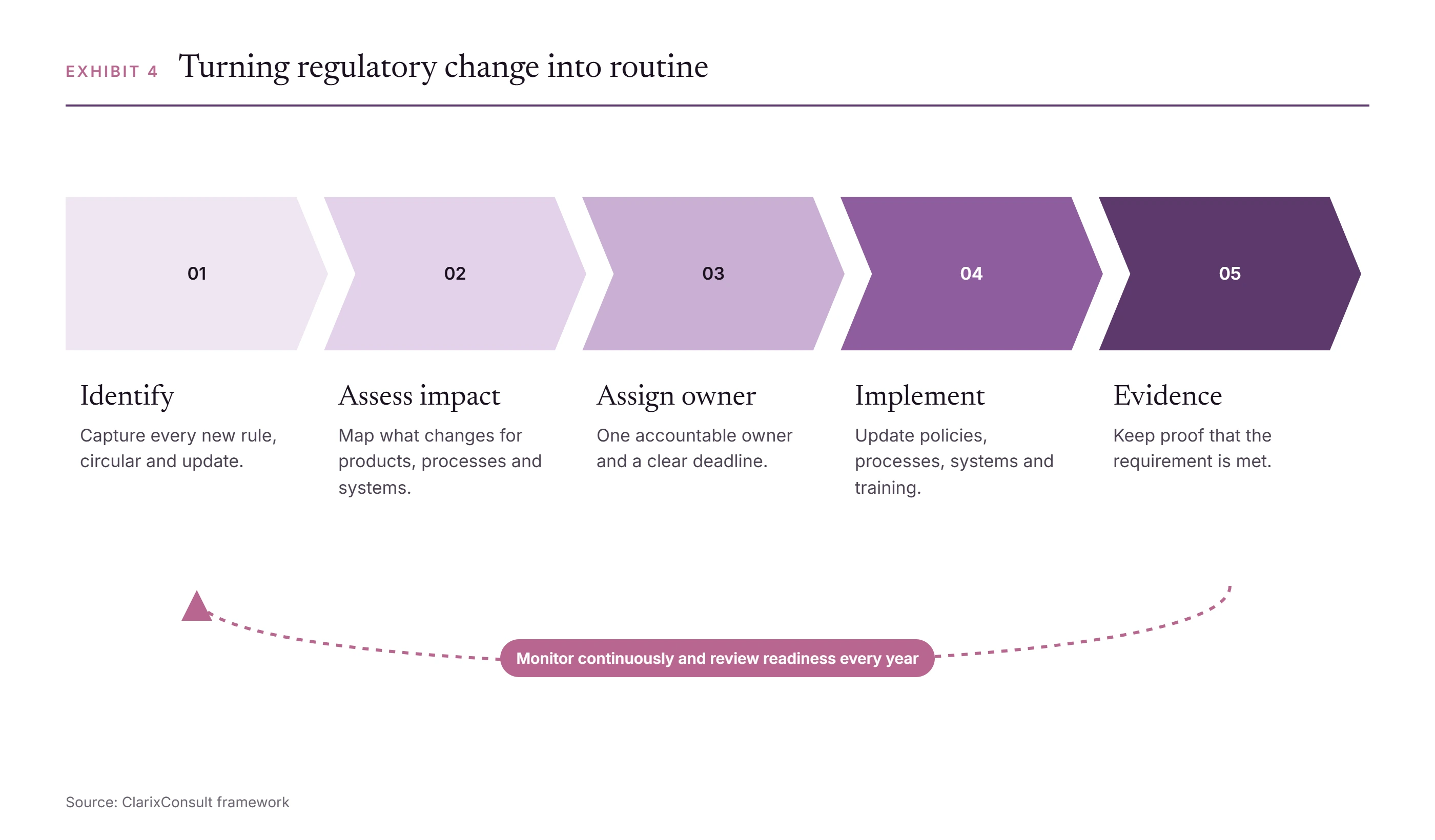
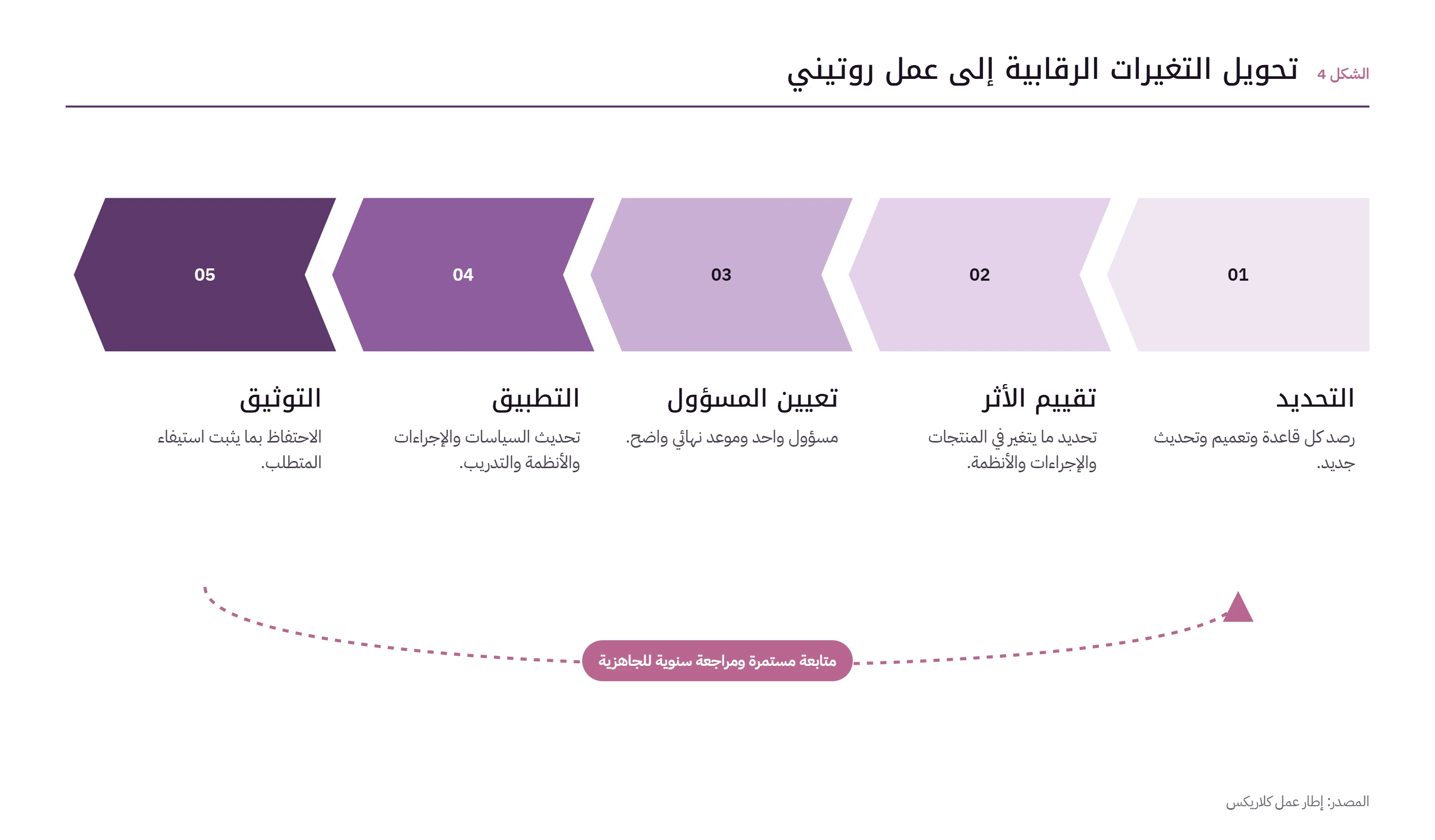
Rules, principles and circulars will keep evolving. Ready companies do not treat each change as a project. They run the same five steps every time, with one accountable owner and clear evidence at the end (Exhibit 4).
Three moves for boards
- Diagnose before you fix. Assess all six capabilities against SAMA requirements, not only the areas raised in the last review.
- Prioritise by exposure. Focus first where regulatory exposure is highest and controls are weakest.
- Make it routine. Assign owners, track regulatory change, and review readiness at least once a year.
Compliance is what you show the regulator. Readiness is how you run the company.
ClarixConsult helps finance companies assess their readiness against SAMA requirements, strengthen governance, risk and compliance, and build a practical remediation roadmap. Talk to us.
Exhibits are ClarixConsult frameworks. Exhibit 3 is an illustrative example and does not describe a real company. This article is for general information only and does not constitute legal or regulatory advice. Finance companies should refer to the official requirements published by the Saudi Central Bank.